Koop
Oct 02, 2007
Koop

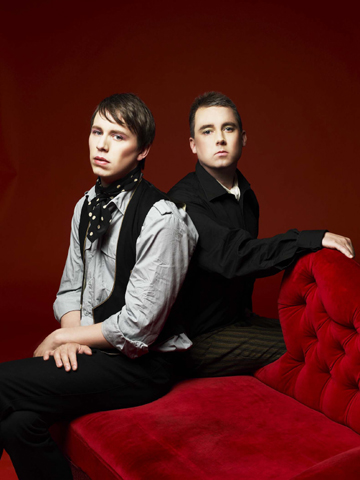
The Swedish duo of Oscar Simonsson and Magnus Zingmark, professionally known as Koop, have done a great job of adapting—and in the process, owning—music from parts of the world other than where they hail from. On their latest long-player—that term is used euphemistically as it only runs a scant 30 minutes—Koop Islands, Koop feature their latest musical adoption: Jamaica. The album showcases a number of singers, including Ane Brun and Earl Zinger (better known as Rob Gallagher of Galliano fame), whose voices fit Koop’s music wonderfully. However, it is the vibe of Islands that stands out more than anything else. Typing from room 702 at the Gallery Hotel in Singapore, Simonsson explains how the Caribbean may give Islands its title and how early 20th century jazz also left its mark.
Under the Radar: How did the Caribbean tone of the album come about?
Oscar Simonsson: We were interested in using the marimba. It sometimes sounds a bit like steel pan drums, which gives the music a Caribbean touch. That, and also the fact that we think our music is an island of its own, led to the album title. But the most significant tone of the album is the ’30s swing influence.
UTR: What classic jazz from the past do you listen to that has the greatest influence on the overall sound your work always seems to possess?
Simonsson: We like many styles of jazz except for jazz/rock fusion. We are mostly influenced by the classic vocal jazz. Good short songs, swing rhythm, and classic singers like Billie Holiday and Frank Sinatra. But the overall sound is mostly depending on how the music is made: sampling and computing, and that comes more from hip-hop and club music.
UTR: Where do you find the samples that make the core of your music?
Simonsson: When we are going to make a new record, we always start by buying lots of bargain records that sound and look interesting. Doing this for ten years, we can almost smell if a record’s got a good sample on it. Then we build up a library with samples in our computers that could either be used in the songs or just serve as inspiration.
UTR: How do you treat the samples to make them sound as smooth and live and real as they do on the album? How are the samples blended with the live musicians’ input?
Simonsson: The more we cut and the more samples we use, the more live it gets. We always have a solo instrument playing live on our songs, and the bass is also mostly played live. These instruments are recorded when the song is almost done, so the musicians has to swing to the samples. But of course there is some cutting and pasting in the live recordings as well.
UTR: What pieces and musicians from past jazz greats do you try to emulate with your songs?
Simonsson: We are not so much into musicians. We are, rather, influenced and inspired by jazz itself. Back in the day, jazz used to be club music that people danced and had a good time listening to. That’s the vibe we want to recreate.
www.dieselmusic.se/koop/
www.myspace.com/koop

Most Recent
- Spiritualized Announce “Songs in A&E” Reissue, Share Two Videos (News) — Spiritualized
- Loma Announce New Album, Share Video for New Song “How It Starts” (News) — Loma
- Rain Age Release New Single Today (News) — Rain Age
- Premiere: Cameron Leahy Shares New Single “From The Infinite” (News) — Cameron Leahy
- Angel Olsen Announces Intimate Solo U.S. Tour Dates for This Fall (News) — Angel Olsen

Comments
Submit your comment
July 18th 2010
6:45am
Every body knows that our life seems to be very expensive, however people require cash for different issues and not every man gets enough money. Therefore to receive some personal loans or sba loan would be good way out.
March 20th 2012
4:17am
Some time ago, I did need to buy a building for my organization but I did not earn enough money and couldn’t purchase something. Thank goodness my mother suggested to try to get the loan from reliable bank. So, I acted so and was happy with my term loan.
July 12th 2012
1:58pm
Different people in all countries take the credit loans from various banks, just because it is simple.
September 3rd 2012
8:05am
I took my first credit loans when I was a teenager and that aided my business a lot. But, I need the commercial loan once again.
January 21st 2013
4:10am
All people deserve very good life and mortgage loans or just small business loan will make it much better. Just because people’s freedom is based on money state.
July 8th 2013
1:35pm
Persuasive essay writing help is guaranteed, when you check out this home page and order essays from the reputable firm.
August 7th 2013
10:14am
One knows that today’s life seems to be expensive, however we need money for various issues and not every man earns enough cash. Thence to get fast credit loans goodfinance-blog.com and secured loan should be a correct way out.
October 29th 2013
3:29am
Searching for somebody who can confirm that professional essays online service is reliable. So, I will say that you can rely on such type of firms.
October 29th 2013
3:39am
When you buy an essay from online companies, try to make sure that your personal information will be secret from the strangers.