
Bedouine on “Neon Summer Skin” and the Importance of the Past
A Mother’s Care
Jun 05, 2026 Web Exclusive Photography by Koury Angelo (for Under the Radar)
After too long of an absence, Azniv Korkejian (aka Bedouine) is returning with her first album of new material since 2019’s Bird Songs of a Killjoy. A placeholder of earlier works, Waysides, was recorded and released in 2021, but Neon Summer Skin hits with fresh songs and cohesively so. The album was inspired by Korkejian’s return to her childhood home in Saudi Arabia to visit her parents before their impending retirement to Armenia. Though focused on the emotional impact of her trip and her parents’ departure, the album also touches on the immigrant experience of dislocation (“Deghma Cheega”), and even the current day connectedness to Korkejian’s own spouse (“One Thing Right”). Korkejian generously went deep with her thoughts on family, place, and memory over Zoom from her Los Angeles home.
“When I came back from [visiting my parents in] Saudi a few years ago, I just felt so sad about the possibility of not going back,” Korkejian shares. “I don’t know that I would ever visit without my parents being there. My association is not really with the place as much as the people that made the place. I feel the same way about Syria,” she says about the country where she was born, but not raised. “I don’t know that I would visit Syria just to walk the streets of Aleppo aimlessly. It’s like the revolving door of family—in and out. So I was just hit with this sadness when I returned. It hit me like a ton of bricks that my childhood was behind me and that I would no longer so much as visit anymore.”
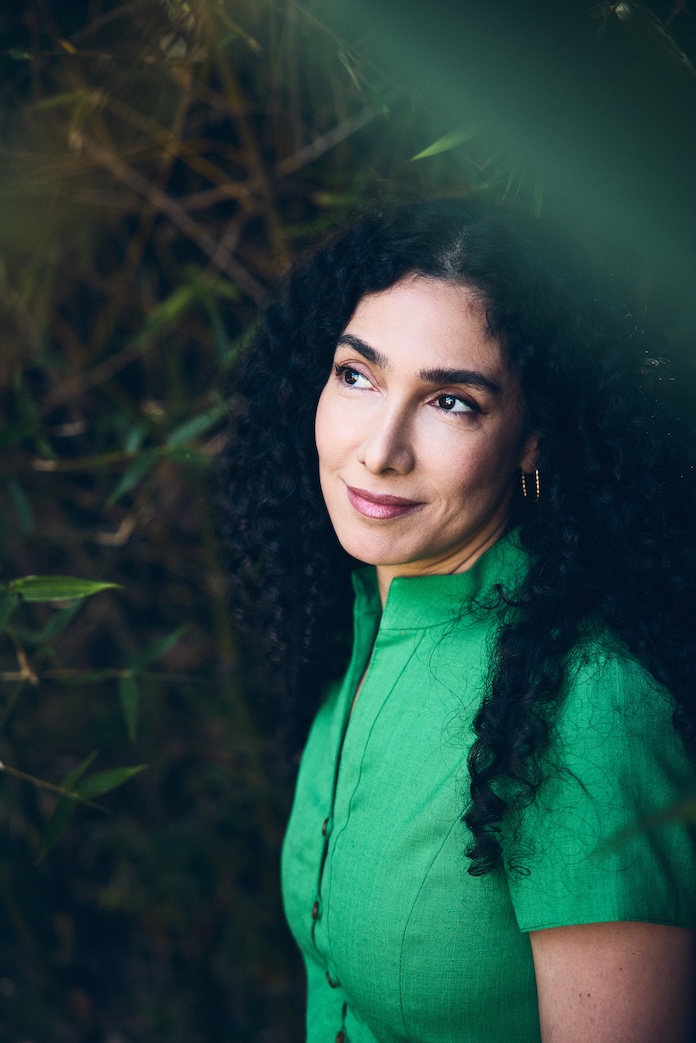


Even though Korkejian had been away from Saudi Arabia for a long time, having immigrated to America when she was 10, little had changed when she returned. “My dad was born and raised in Syria. And my mom was born in Syria and raised in Lebanon. My dad ended up taking a job as an immigrant worker in Saudi Arabia at a young age. My brothers were born there and when my mom was pregnant with me, they briefly relocated to Syria so I could be born there in [the presence of] family. And then we returned to Saudi Arabia,” she says.
“My dad eventually worked as a manager at an American compound there. It was essentially a gated neighborhood and kind of an Americanized place. So we were raised as Americans in Saudi Arabia. A lot of the teachers at the American school there were given room and board. So there was instantly a language barrier at home. My parents were learning English from us and we were learning Armenian from them. It was kind of bizarre in that way,” Korkejian says.
When she returned to visit her parents, prior to writing the songs for the album, they were back living in the same compound. “It was incredible for me because I am so nostalgic and have such a soft spot for my childhood there. It’s so dreamy. The compound had changed and had been renovated, but it felt the same. The moment I stepped back I just got slammed with that feeling. It’s the most satisfying feeling in the world.”
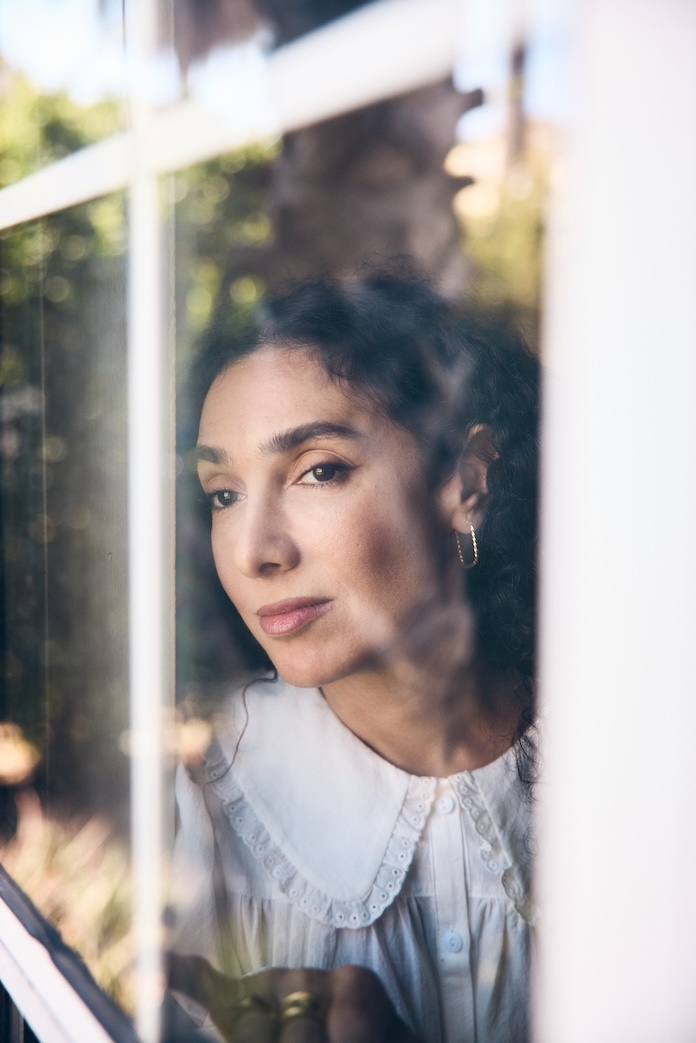

Aside from her own feelings, one of the most powerful aspects of Neon Summer Skin is the chance for Korkejian to tell the stories before her own story. This happens most powerfully on the album’s emotional centerpiece, “Canopies.” Korkejian recorded her mother Janet’s spoken word recollection of her own childhood. “I still try to meet my parents when they are in Houston visiting my brother, who had their first grandkid. We were out grabbing food at Phoenicia, a Middle Eastern restaurant there, and we were driving around the parking lot. I kept asking [my mom] these same questions over and over again and kept forgetting the details. So it was the first time I thought of recording her,” Korkejian recalls.
On “Canopies,” Korkejian’s mother starts describing her early childhood in English, but drifts back and forth to her native Armenian. Before going into her native tongue, the listener can note that she is talking about something that happened when she was seven years old. Syria’s laws only provide for a limited number of years of strict maternal custody. “My grandmother wanted to protect my mom from her husband because he was a bad man. So [my grandmother, with my mom] escaped Syria and she more or less hid my mom in this orphanage in Lebanon that was originally founded for [Armenian] genocide survivors just north of Beirut,” Korkejian explains. “My grandmother lived in a relative’s apartment nearby, but she could only visit her for like half an hour during visiting hours once a month or once a week. And my mom would just wait with bated breath for her visits. She missed her so deeply. It was such a hard decision for my grandmother, but ultimately she did what was best [for her child]. My mother thinks of her fondly and loves her so much. She has nothing but good things to say about her and what she did for her, even as painful as it was.”
Korkejian’s favorite part of “Canopies” is the retelling of her mother’s recollection of her grandmother’s words. “Waves, waves fold over, and send her scent to me, from the rugged cliffs of the Mediterranean, to the bars of my balcony,” Korkejian sweetly sings on the heels of her mother’s recorded words. “That little mantra is what my grandmother would say about feeling her child’s presence in the air. She would sit on the balcony [of our relative’s apartment] and say this [about keeping a connection to my mother in the nearby orphanage]. I knew that my mom was in an orphanage growing up, because every time we would go to Lebanon, she’d try to visit and donate money when she could. When I was a kid I was so oblivious, like, ‘Why are we doing this?,’ but when I realized that was where she grew up the weight of it hit me. And when I heard about what her mom used to say to herself it was just so deep and poetic and beautiful to me,” Korkejian says.
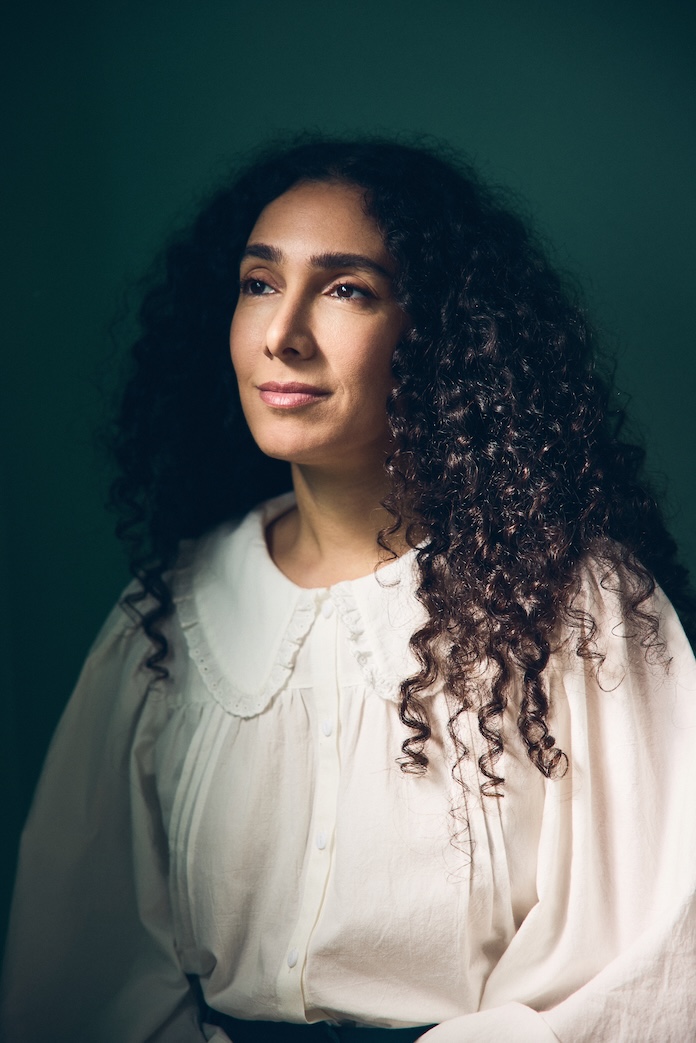

As expertly painted from memories of memories as “Canopies” is, Neon Summer Skin holds Korkejian’s own memories as well. “White Patent Leather” is, at least for Western sensibilities, a graphic recollection of a Syrian wedding tradition. And the album’s title song is the most pointed call back to Korkejian’s own childhood. Recalling summers spent in the swimming pool in brightly colored bathing suits. “One of the things I realized [when writing this song], was how well I was taken care of and how I know that’s not the case for everyone. And how fortunate I was to receive the kind of care where I didn’t even have to consider my own safety. What a concept that you don’t have to think about the air that you breathe because you [just] have it,” Korkejian says.
Given countless stories of childhood trauma and the impact the separation of children from their parents can have, it is remarkable how Korkejian’s mother emerged from her own displacement. “When I tell my mom I miss Saudi or just being a kid, she says, ‘Why are you looking back? You have to look forward. You know the things I could think about if I look back? It’s so sad, so why would you do that?,’” Korkejian says.
She sings of caring for her own “sleepy daughter” in “Neon Summer Skin” as well. “I was thinking about a future family that I might one day have,” Korkejian explains. “And just recognizing the importance of being that to somebody one day and how that’s just the way it should be. Kids should never have to think about their own safety. That should be a luxury afforded to every child.”
Read our 2021 Self-Portrait article with Bedouine.
Read our 2017 interview with Bedouine.

Subscribe to Under the Radar’s print magazine.
Support Under the Radar on Patreon.

Most Recent
- 500 to Go: Join Under the Radar’s Summer Subscription Campaign (News) —
- You’ll Leave the City EP (Review) —
- Quicksand @ Rough Trade Below NYC, New York, US, July 17, 2026 (Review) —
- Premiere: Holy Pinto Shares New Single “Billboard” (News) —
- I Don’t Know Right From Wrong: Lost La Peste 1976-1979 Vol. 1 (Review) —

Comments
Submit your comment
There are no comments for this entry yet.