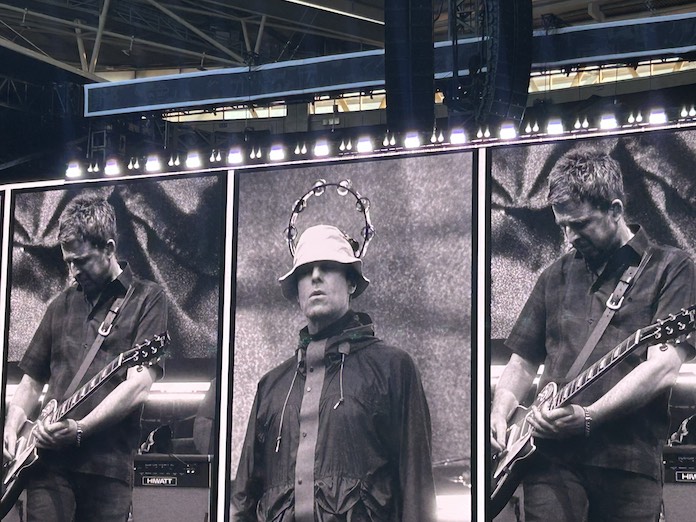
Oasis performing “Acquiesce” (photo by Mark Redfern).
Oasis, Richard Ashcroft, Cast
Oasis @ Wembley Stadium, London, UK, July 30, 2025, July 30th, 2025
Aug 12, 2025
Photography by Mark Redfern (and Additional Photos Courtesy of Big Brother Recordings)
The UK. The summer of 1995. The height of Britpop and the era of Cool Britannia. The Glastonbury that helped make Pulp stars when they filled in for The Stone Roses at the last minute not long after Pulp’s biggest single “Common People” was released. And the time of Blur vs. Oasis, a chart battle fueled by the media. I was in London that summer, 19 years old and home from university in Los Angeles. I was at Glastonbury ’95 and I fully bought into Britpop.
I was at the local record shop on release day when the London-based Blur released their single “Country House” and the Manchester-based Oasis (led by brothers Liam and Noel Gallagher) put out their single “Roll With It” on the same day, creating headlines and TV news stories as the two Britpop titans went head to head. Blur won the battle, with “Country House” landing at #1 to “Roll With It” at #2, but Oasis won the great Britpop war of 1995 when their album (What’s the Story) Morning Glory? sold more copies than Blur’s The Great Escape.
In the long run Blur had a more varied career, later releasing the more experimental albums 13 and Think Tank, and with frontman Damon Albarn finding great success with his virtual band Gorillaz (and guitarist Graham Coxon recently garnering acclaim with The WAEVE, the band with his romantic partner Rose Elinor Dougall). Oasis, meanwhile, released two unimpeachable classic albums—1994’s debut Definitely Maybe and (What’s the Story) Morning Glory? Their B-sides of the era are truly excellent—Oasis rivalled Suede as one of the ’90s bands with the best B-sides, as evidenced by The Masterplan, their B-sides collection from 1998. But their bloated third album, 1997’s Be Here Now, while certainly not without its charms (“D’You Know What I Mean?” and “Stand By Me” in particular), is considered to be one of the factors that helped kill off the Britpop movement in the late ’90s. 2000’s fourth album, Standing on the Shoulder of Giants, has some top tracks but got a lukewarm critical response. Oasis’ final three albums—Heathen Chemistry (2002), Don’t Believe the Truth (2005), and Dig Out Your Soul (2008)—were all mixed bags that failed to reach the heights of their ’90s work. Oasis split up in 2009 due to a fraught relationship between the Gallagher brothers. Noel went on to release various solo albums. Liam and some of the other members of Oasis released two albums as Beady Eye, and then Liam put out a solo album and in 2024 partnered with The Stone Roses’ John Squire on an album.
Over the years there was much speculation on whether or not Liam and Noel would bury the hatchet on their long-running and often amusing feud and finally reform. It was finally announced in 2024 that they were returning for a run of stadium shows this year. A cynic or conspiracy theorist would argue that their time away and very public feud was all an act, after all when the band called it quits in 2009 critical acclaim had faded away and public interest had waned, but now they are back, the world can’t get enough of Oasis. However, 16 years is a long time to keep such a ruse going.
I spent a month in London this summer and if 1995 was the summer of Britpop, 2025 was the summer of Oasis. Everywhere you walked, on almost every tube train you rode on, you could spot an Oasis fan clad in one of their signature T-shirts. I happened to be on Berwick Street, where the cover of (What’s the Story) Morning Glory? was shot, because there are still a couple of great record shops there, and I came across Japanese tourists in Oasis shirts in the middle of the road trying to recreate the album cover photo. As part of their reunion tour Oasis played seven sold-out shows at London’s Wembley Stadium, the same venue where the iconic Live Aid charity concert was held 40 years ago. For those keeping tally in the great Britpop war, by comparison in 2023 Blur played only two sold-out concerts at Wembley (although more depressingly, post-Britpop band Coldplay are playing 10 shows at Wembley this year).
I had tickets to see Oasis in Los Angeles in November 1996 but alas they cancelled the show (and the rest of their U.S. tour that year) because of infighting between the Gallagher brothers. Despite seeing Blur, Pulp, The Verve, Supergrass, Sleeper, Elastica, The Charlatans, Echobelly, Kula Shaker, and many of the other Britpop stars in the ’90s, the first and only time I saw Oasis was when they played Coachalla in 2002. By then the lineup had changed quite a bit, with Liam and Noel the only original members left in the band. When I realized I’d be in London at the same time as Oasis’ reunion shows, I emailed the publicist on a whim about press tickets, not expecting much as the shows sold out quickly and resale tickets were fetching high prices. But within a few days two tickets were confirmed for myself and my co-publisher/wife Wendy.
On the tube to Wembley packed with Oasis fans we spoke to two women from Southhampton who said they had initially failed to get tickets, despite having four laptops and two phones going the moment they went on sale. Luckily for them, a friend of a friend couldn’t make it to the show and offered their tickets to them. Disembarking the train and on the walk to the stadium we were greeted by a clever ad by the eyeglasses company Specsavers that read “The original blur rivals.”
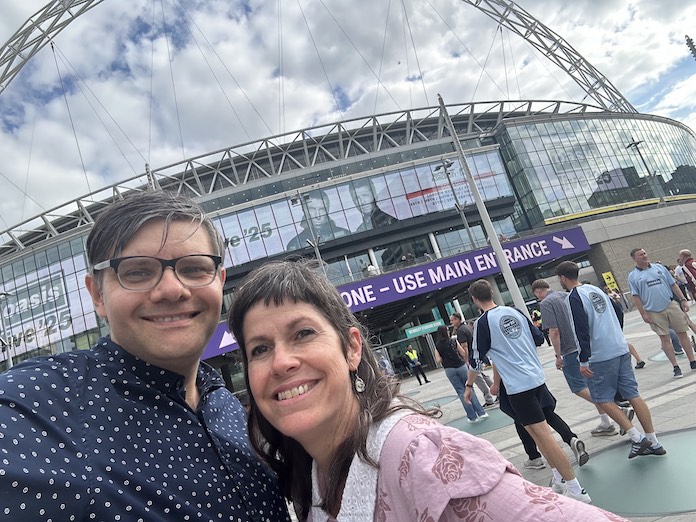

We were surprised that our seats were next to fellow music journalist Elizabeth Aubrey. Liz’s boyfriend, music and sports journalist Dan Lucas, tragically died in 2017 at the young age of 31. As well as contributing to the The Guardian and other outlets, Dan was also a writer for Under the Radar, a personal friend, and a fierce hater of Oasis (he once wrote for us a scathing review of a Beady Eye album). Liz relayed that Dan forgave her Oasis fandom for the sake of their relationship.
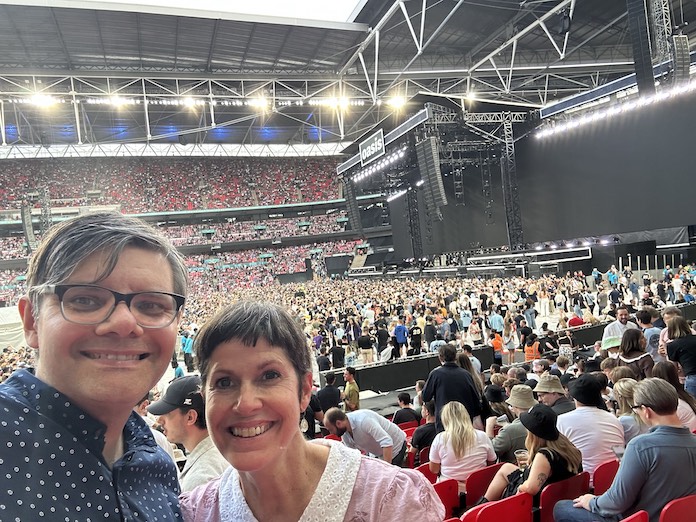
First up on the bill, at six in the evening, was Cast—a third tier Britpop band founded by John Power, formerly of The La’s. “Wembley on a Wednesday. Lookin’ good, lookin’ cool,” said Power as he took the stage. Cast never made much of an impact in America, but in the UK they had three Top 10 albums and seven Top 10 singles (although two of their best known songs—debut single “Finetime” and its followup “Alright”—landed at #17 and #13 on the charts). They played both songs at Wembley during their seven-song set, along with two other songs from their 1995 debut album All Change—“Walkaway” and “Sandstorm.” Power pointed out that “Walkaway” became popular when it was played during the BBC’s coverage of the UEFA Euro 1996, where England’s football team lost and the whole nation had to walk away from the tournament.
“This next song is called ‘Live the Dream,’ which I know the band are and you are by being here,” said Power before playing a song from their 1997 sophomore album, Mother Nature Calls. Cast’s setlist may have leaned heavily on their earlier hits, but they also performed one new song, “Poison Vine,” a new single released this year that features British/American soul singer P. P. Arnold, who joined the band onstage for the song. It’s the first single from Cast’s upcoming eighth studio album, Yeah Yeah Yeah, due out January 30, 2026. Before ending their set with “Alright,” Power said: “Something special has been happening on this tour… Every gig we’ve been playing has been a moment in time. This is your moment.”
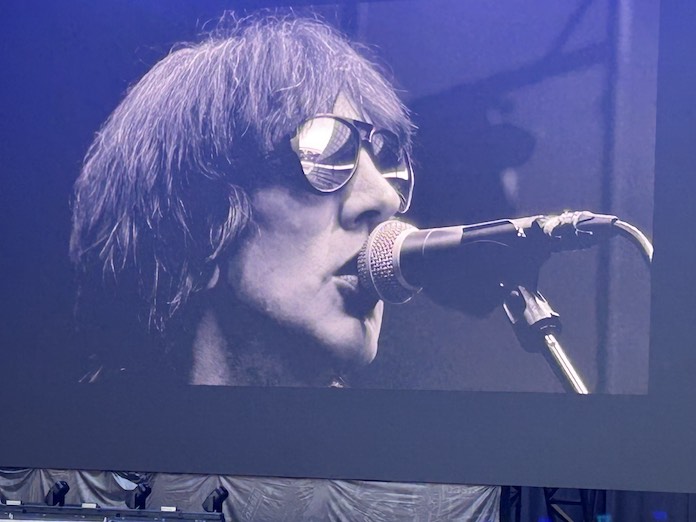
The Verve, and in particular frontman Richard Ashcroft, have had a long association with Oasis. In Oasis’ early days they actually opened for The Verve before eclipsing them commercially. Noel Gallagher has stated that (What’s the Story) Morning Glory? track “Cast No Shadow” was inspired by Ashcroft and dedicated to him. The Verve split up in 1995 shortly after the release of their sophomore album, A Northern Soul, but quickly reformed and had their own commercial success in 1997 with the massive album Urban Hymns, fueled by the hit singles “The Drugs Don’t Work,” “Lucky Man,” and “Bittersweet Symphony” (one of the signature songs of the ’90s). That high was short-lived, with The Verve breaking up for the second time in 1999 in part because of tensions between Ashcroft and guitarist Nick McCabe. The band had a brief reunion from 2007 to 2009, which resulted in the band’s fourth (and so far final) album, the fittingly titled Forth, before splitting yet again.
Since his 2000-released debut solo album, Alone with Everybody, Ashcroft has had an active solo career, to mixed results. All of his solo albums have hit the Top 5 on the UK album charts, with Alone with Everybody debuting at #1, although most of the albums haven’t done as well internationally and some haven’t fared as well with critics. Still, when Oasis announced their reunion tour they made it clear that Ashcroft was the clear and obvious choice to open for them. And it was certainly a wise pairing.
Ashcroft’s set list leaned heavily on The Verve’s Urban Hymns, which seemed just fine with the crowd. While his backing band can’t quite recapture the magic of the original Verve lineup, they were more than proficient at performing the band’s songs. Ashcroft’s guitarist Steve Wyreman was particularly impressive. Ashcroft opened his set with a pair of Urban Hymns album tracks—“Weeping Willow” and “Space and Time” (the latter reminds me of a particularly painful breakup in college)—before playing “Break the Night With Colour,” from his 2006 solo album Keys to the World. It’s one of his better solo singles and sounded heavier live, aided by a blistering guitar solo by Wyreman. It was also the only solo song Ashcroft played. His other biggest solo hit, debut solo single “A Song for the Lovers,” was missing and unlike Cast he didn’t perform his latest single (this year’s “Lover,” the first taste of Lovin’ You, his first solo album of original material in seven years, due out October 3). Instead Ashcroft was in crowd-pleasing mode, ending his set with all four singles from Urban Hymns, an album that likely most of the Wembley audience owned or at least had heard. “The Drugs Don’t Work,” performed mainly acoustically, initiated the first mass singalong of the night. “That one was for my nan,” Ashcroft said. Before the next song, he said, “This one is dedicated to my wife Kate. It’s called ‘Lucky Man.’ For all the great mums and nans in the world. Because you’re a lucky man if you have a great mum.” After “Lucky Man” was “Sonnett” and then the inevitable finale of “Bittersweet Symphony.” Ashcroft dedicated the song to the Lionesses, England’s national women’s football (or soccer) team, who were crowned champions after winning the UEFA Women’s Euro 2025 final match against Spain just three days earlier. “It’s such a rare, rare thing when it happens. It’s a bit like tonight, Oasis are going to win 22-nil,” Ashcroft said, referring to the number of songs Oasis would be performing later, “and I’m already winning 7-nil. That’s the beauty of this kind of event, we can’t lose, a bit like the Lionesses. So this one’s for them, this is ‘Bittersweet Symphony.’” The crowd of course erupted and maintained that energy throughout the rousing song.
Ashcroft’s Oasis opening setlists have been fairly consistent, although the solo tracks “C’mon People (We’re Making It Now)” and “A Song for the Lovers” did make their way onto one setlist early in the tour. Old school Verve fans hoping for earlier material from the band’s first two albums would’ve come away disappointed, but what can you expect from a seven-song opening set? Of course he’s going to play the biggest hits from the biggest album. And Ashcroft more than did his job priming the audience for the main event.

Oasis walked on the stage to “Fuckin’ in the Bushes,” the opening instrumental track to Standing on the Shoulder of Giants, and then immediately launched into “Hello,” the opener on (What’s the Story) Morning Glory? and a fitting first song. The band’s reunion lineup features founding members the Gallaghers and guitarist Paul “Bonehead” Arthurs (who left the band in 1999), alongside bassist Andy Bell (also of Ride) and guitarist Gem Archer, who both joined the band in 1999. The band’s current touring lineup includes Joey Waronker on drums, Christian Madden on keyboards, and a horn section featuring Steve Hamilton, Joe Auckland, and Alastair White.
Whereas during Cast’s set the video screens played simple color images of the band performing and during Ashcroft the images switched to black & white, Oasis’ video presentation was a much more elaborate controlled frenzy of multimedia images, sometimes in color, sometimes in black & white. Sometimes featuring video of the band live on stage, other times incorporating other images or a mix of the two. There were three large screens above the stage, each playing different interconnected images. It was all very immersive.
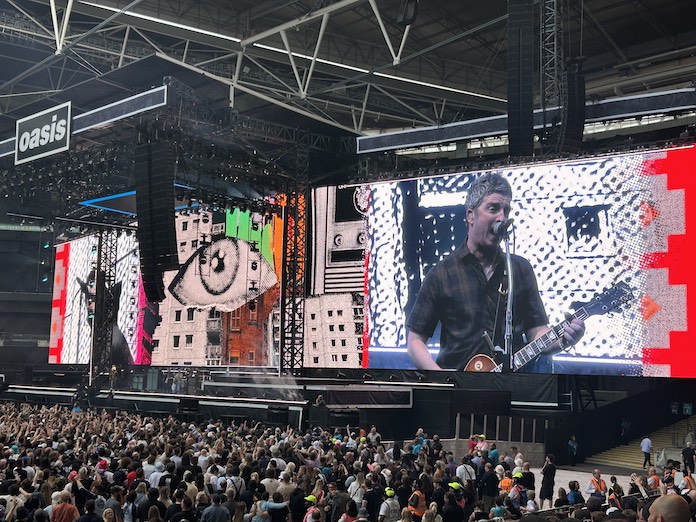
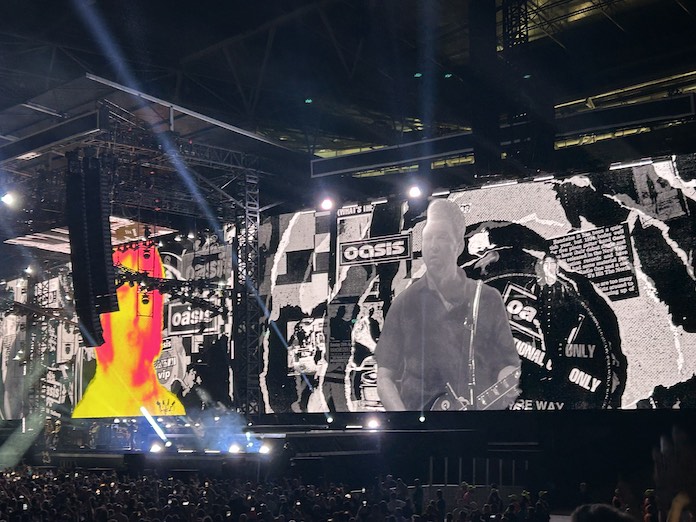
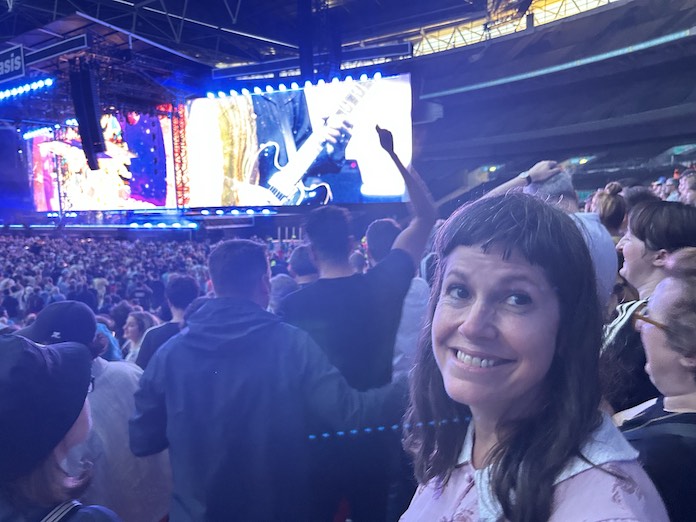
After “Hello” they wasted no time diving into a B-side, “Acquiesce,” which was originally a B-side to 1995 single “Some Might Say” and is probably one of the best known B-sides of the era. It was later released as a single in its own right and finally appeared on the UK singles chart this July thanks to their reunion concerts, peaking at #17. During “Acquiesce” Liam kept balancing his tambourine on his head.
In between “Morning Glory” and “Some Might Say,” Liam declared: “It’s been a long time. Nice one for sticking with us. We must be hard work. You wanna try being in the fuckin’ band.”
“Bring It On Down” was the first song they performed from Definitely Maybe and it’s not the best known song on that album. Liam dedicated the song, saying “This one’s for all the glue sniffers” for some reason (and my mind immediately went to the Airplane! joke “I guess I picked the wrong week to quit sniffing glue”). They stuck in debut album territory with “Cigarettes & Alcohol,” for which Liam got the audience to turn their backs to the band and put their arms around each other. As the vocals kicked in everyone spun back around to face the stage. The chorus to Definitely Maybe track “Fade Away” is “the dreams we have as children fade away,” so it made sense that Liam dedicated it to all the young fans in the audience. And we did see some kids and teens, some who seemed into it and others who were clearly dragged by their middle aged parents but maybe recognized a few of the big hits, such as “Supersonic,” the last song of the initial four-song Definitely Maybe run.
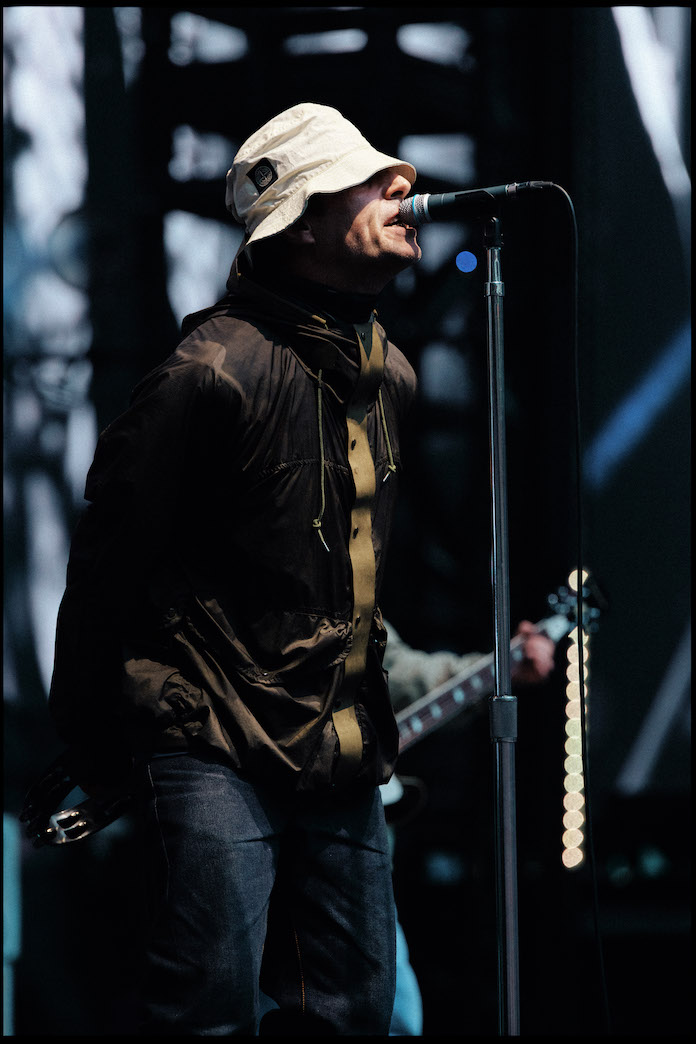
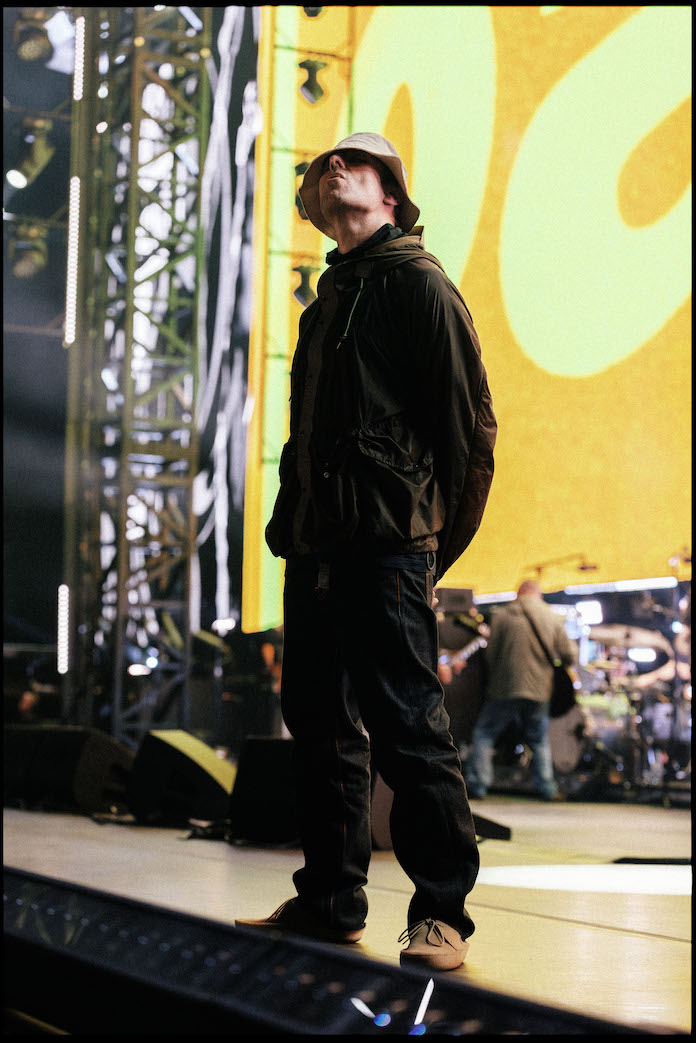
Oasis returned to (What’s the Story) Morning Glory? with “Roll With It,” the song they battled Blur with. Like Ashcroft did with “Bittersweet Symphony,” Liam dedicated the song to the Lioneses and the Britpop stable got a huge crowd reaction. It was around this time we spotted Johnny Marr (the former guitarist for The Smiths) in the VIP area.
Liam’s vocals had been in top form so far, but he took a break and left the stage while the band did a three-song run featuring Noel on vocals, starting with another B-side, “Talk Tonight” (which was also one of the B-sides on the “Some Might Say” single). Many in the audience turned on their mobile phone flashlights and waved them back and forth in the air, the way they would’ve done with cigarette lighters three decades ago. “This next song was in The Royal Family. Not your Royal Family, our Royal Family,” Noel said, introducing another B-side, “Half the World Away.” It was originally a B-side to “Whatever,” a 1994 standalone single the band released in between their first two albums, but in 1998 was then used as the theme song to the British sitcom The Royle Family. Live, the song featured the horn section, which was quite nice. Then “Little by Little” was the only song Oasis performed from their 2002 album Heathen Chemistry.
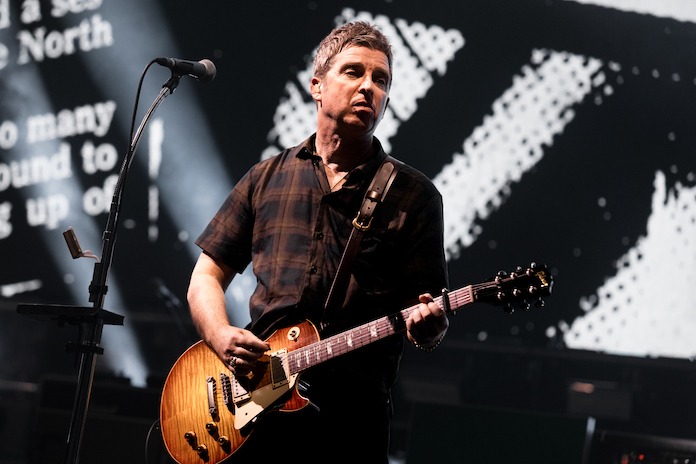
Liam returned to the stage for “D’You Know What I Mean?,” the seven-minute opening track to 1997’s Be Here Now and the album’s first single. It was followed by the only other Be Here Now song they did, “Stand By Me,” which Liam dedicated to Noel. During “Stand By Me” the video screens flashed up a lot of family photos, not necessarily of the Gallaghers but just family photos in general.
Then it was back to their first two albums with “Cast No Shadow” and “Slide Away,” before “Whatever,” which briefly morphed into a cover of The Beatles’ “Octopus’s Garden.” The video screens recreated the serene cover artwork to the “Whatever” single. The main set ended with two Definitely Maybe tracks, “Live Forever” (still anthemic as fuck) and “Rock ‘n’ Roll Star.”
The encore started with two Noel-sung tracks. During “The Masterplan,” a B-side on the “Wonderwall” single, he introduced the rest of the band. “The Masterplan” is considered one of the band’s best songs and it’s astounding that their output was so good in the mid-’90s that they could throw away such gems as B-sides, although it was the time of the great B-side. The song was also the namesake for Oasis’ 1998 B-sides collection. The horn section returned for “The Masterplan,” inducing chills. Then it was all (What’s the Story) Morning Glory? tracks to close out the show. For “Don’t Look Back in Anger,” Noel had the audience sing the chorus for him, which they were more than eager to do. Liam returned for “Wonderwall,” perhaps the band’s signature song (although, what’s a wonderall anyway?). And then the whole wonderful night climaxed with “Champagne Supernova,” the epic seven-minute closer to (What’s the Story) Morning Glory? “We’ll see you down the road,” said Liam, signing off. It was followed by a brief fireworks show.

It was hard to quibble about Oasis’ setlist. Sure, I would’ve been fine without “Bring It On Down” and “Little By Little,” and would’ve loved to have heard “Hey Now!” (What’s the Story) Morning Glory?), “All Around the World” (Be Here Now), and “Go Let It Out” (Standing On the Shoulder of Giants), but such things are a matter of personal taste. They played “Whatever,” the majority of their two best albums, and four B-sides—what else could you ask for?
We braved the massive crowd walking back to the tube, still high on what we’d just witnessed, still humming “Champagne Supernova.” I had been to Wembley Stadium three times before as a kid, twice to see Madonna (in 1987 and 1990) and once to see The Rolling Stones in 1990 during their Steel Wheels Tour (aka their Urban Jungle Tour). It occurred to me that seeing Oasis three decades after their heyday was similar to seeing The Rolling Stones 28 years after their formation. It’s hard to remember what 14-year-old me thought of the Stones, but Oasis sounded as vital as ever at Wembley and their fans ate up every note. There’s nothing like being in the same space with 80,000 other people, a sea of bucket hats, singing along to every song. Much has changed since the summer of 1995, but that feeling has never gone away. And if The Rolling Stones can still perform (their 2024 Hackney Diamonds Tour was amusingly sponsored by AARP, the organization for elderly people), then perhaps Noel and Liam can continue to bury the hatchet and keep performing for years to come. If not, we’ll always have Wembley 2025 and the band still have more dates on their tour to come, including some shows in North America.
Subscribe to Under the Radar’s print magazine.
Support Under the Radar on Patreon.

Most Recent
- Nottingham Waterfront Festival 2026, The Canalhouse, Nottingham, UK, July 4, 2026 (Review) —
- Sammy Hagar @ British Airways ARC, London, UK, July 9, 2026 (Review) —
- Def Leppard @ The O2, London, UK, July 2, 2026 (Review) —
- The Last Dinner Party Share New Single “Knocking At The Sky” (News) —
- Premiere: DD Island Shares New Single “Setting Sun” (News) —

Comments
Submit your comment
There are no comments for this entry yet.